The AI reckoning
AI agents will transform business in 2027, bringing new cyber, infrastructure, regulatory and social risks. Explore how organisations can build resilience.

From ports and pipelines to satellites, subsea cables, desalination plants, and data centres, infrastructure is a primary target in the no rules/new rules world. Disruptive and destructive attacks on critical assets signal that the geopolitical gloves are off and that resilience must be a strategic priority for countries and organisations alike in 2027.
Infrastructure assets are concentrated points of critical capability – complex, expensive, and hard to replace. Like AI data centres, imaging satellites, and oil refineries, they are often dual-use, serving both the mainstream economy and the defence industrial base. Increasingly, private companies are developing, owning, or operating these strategic capabilities, sometimes giving them control over domains once regarded as the preserve of states. At the same time, governments are becoming more interventionist about infrastructure they regard as strategically important. This makes them valuable, politically contested – and increasingly strategic – targets.

In order to play this media, we need your consent to add cookies to your device. Do you accept these cookies? Find out More.
The number of armed conflicts worldwide is historically high, and state and non-state actors are looking for any edge over their adversaries. Threats against infrastructure are being used as leverage and deterrence. Hybrid and asymmetric attacks target civilian assets to undermine economic growth, social cohesion, and political stability – as well as warfighting ability.
Governments need private capital and capabilities to build and operate infrastructure, everything from energy networks and data centres to satellites, communications and defence-adjacent infrastructure. At the same time, geopolitical competition is making states less comfortable allowing strategically important capabilities to sit beyond their direct control, particularly where they depend on foreign or privately controlled technology. The result is a more contested boundary between public and private infrastructure, bringing greater scrutiny of ownership, investment and operating rights, and in some markets greater risks of state intervention, forced localisation, changes to concessions or expropriation.
AI can help threat actors analyse targets and identify vulnerabilities, while long-range armed drones, AI-enabled cyber attacks, and gig-working operatives recruited online are putting even hardened assets within range of more threat actors in more locations. The front line is potentially everywhere.
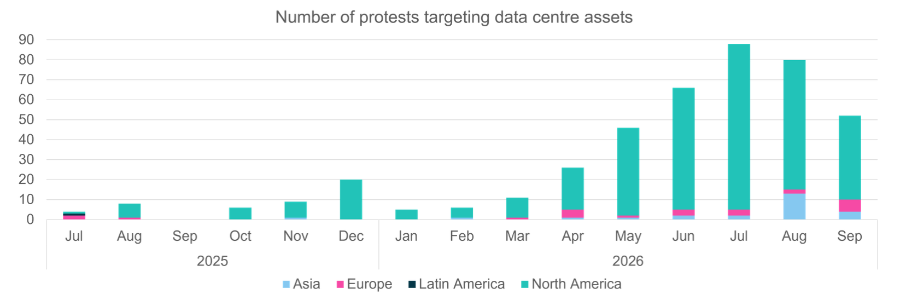
From power plants to data centres, activated societies are challenging the social license and operational security of infrastructure projects. It’s not mere NIMBYism: local communities have legitimate environmental, health, and economic concerns.
Source: Seerist
Infrastructure operators, financers, and insurers should focus on preparation. They need a clear understanding of the changing threat environment, evaluation of plausible scenarios, and active risk management from front-end design through long-term operation to reduce the likelihood or impact of incidents.
Infrastructure customers – companies, civil society groups, and government organisations – should focus on resilience: the ability to maintain operations during periods of disruption.
AI agents will transform business in 2027, bringing new cyber, infrastructure, regulatory and social risks. Explore how organisations can build resilience.
Extreme heat will intensify pressure on infrastructure, supply chains and food security. Explore how organisations can adapt and build resilience.
Volatility is unavoidable, but opportunity remains. Explore how new markets and emerging frontiers can be pursued with greater confidence.
As AI moves from advice to decisions, human oversight matters more than ever. Explore how organisations can balance automation with judgement and accountability.
Where is risk rising, falling or changing? Explore our global and regional RiskMap 2027 maps and country risk ratings to see how the operating environment is evolving across the markets that matter to you.
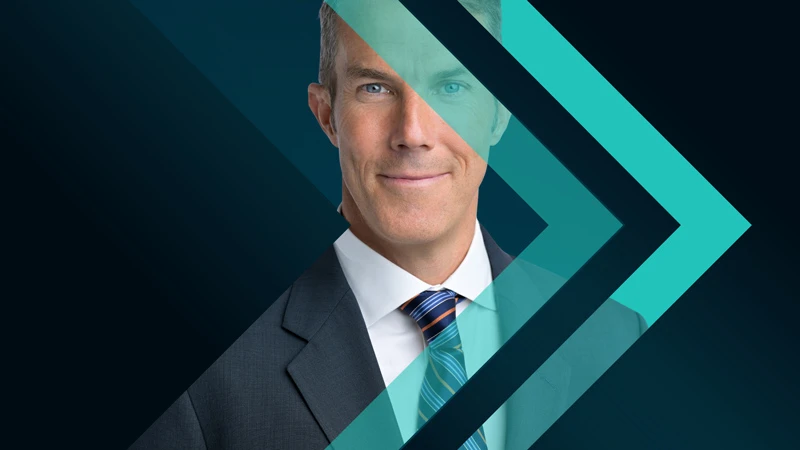
Control Risks CEO Bill Udell looks beyond the individual risks to consider what they mean collectively for leaders making decisions in an increasingly complex global environment, and how businesses can prepare for what comes next.
Explore what the RiskMap outlook means for your markets, investments, operations, people and strategic priorities with our experts. From a bespoke briefing to specialist advice, our strategic intelligence and security teams can help you understand your exposure, and make confident business decisions.